Curriculum Structure
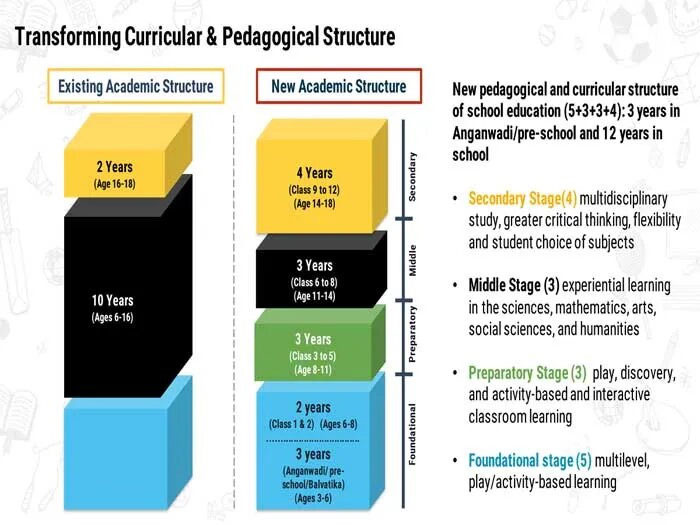
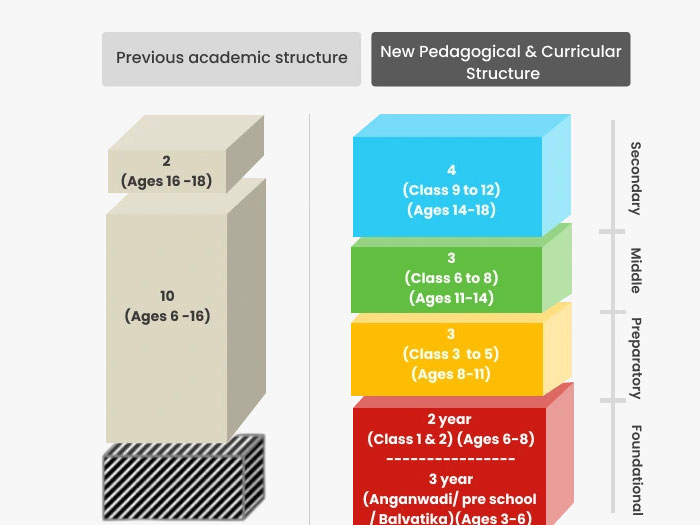
Aligned with NEP 2020, GSEB is transitioning from the old 10+2 format to the new 5+3+3+4 structure, covering ages 3–18 years:
Foundational Stage (5 years, ages 3–8):
Includes 3 years of Anganwadi/pre-school and 2 years of primary schooling (Grades 1–2).
Focuses on play-based and activity-based learning to support critical cognitive, social, and emotional development in early childhood.
Preparatory Stage (3 years, ages 8–11):
Includes classes 3 to 5
Builds upon the foundational years by blending play with more structured academic learning.
Emphasizes language development, foundational literacy and numeracy, and early subject exploration through interactive classroom experiences.
Middle Stage (3 years, ages 11–14):
Includes classes 6 to 8
BuiFocuses on critical learning objectives, conceptual understanding, and experiential learning.
Students are introduced to more abstract concepts across subjects and are encouraged to build critical thinking, analytical, and problem-solving skills.
Secondary Stage (4 years, ages 14–18):
Covers Grades 9 to 12, marking the final and most flexible phase of school education.
Encourages multidisciplinary learning, allowing students to choose subjects across disciplines and move away from rigid stream-based choices.
This stage aims to reduce board exam pressure by redesigning assessments for comprehensive and holistic evaluation.
This NEP revised education framework offers a restructured approach toward transforming the learning experience in schools. This is making education more aligned with real-world skills, personalized to student needs, and capable of nurturing well-rounded learners ready for higher education and beyond.